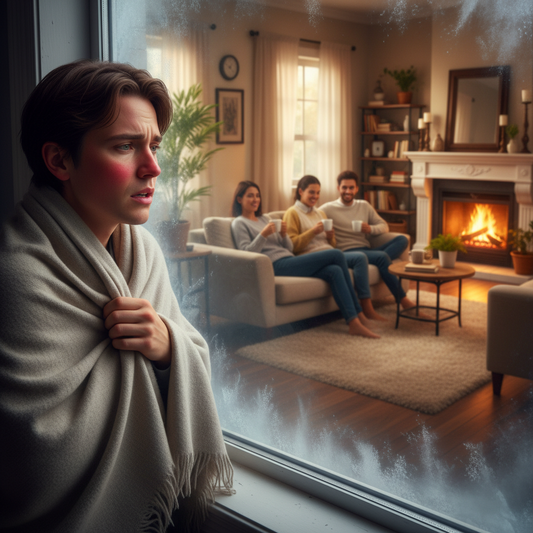

How Blood Flow Changes in Cold Weather
Athtec Editorial TeamShare
If you’ve ever stepped outside on a cold morning and felt your fingers stiffen within minutes, you’ve probably wondered what’s happening inside your body. Your hands feel numb. Your toes lose sensation. Your legs feel tighter and heavier than usual.
It can feel like your circulation is “failing.”
But in most cases, cold weather doesn’t stop blood flow — it redirects it.
Understanding how blood flow changes in cold weather makes those sensations less alarming and more predictable. Your body isn’t malfunctioning. It’s protecting you.
Why does the body change blood flow in the cold?
Your body’s top priority in cold conditions is simple: protect the core.
Your core houses vital organs — the heart, lungs, brain, liver. These organs need a stable internal temperature to function properly. When cold air hits your skin, temperature receptors send signals to your brain that heat is being lost.
In response, your body activates a protective mechanism called vasoconstriction.
Vasoconstriction means the small blood vessels near the skin narrow. When those vessels narrow, less warm blood travels to the surface of your body. This reduces heat loss to the environment.
Cause → effect:
- Cold exposure
- Blood vessels near the skin narrow
- Less warm blood reaches hands, feet, ears, and face
- Core temperature is preserved
You feel colder in your extremities because your body is conserving heat where it matters most.
What’s happening behind the scenes: vasoconstriction explained simply
Blood carries heat. When it flows near the surface of your skin, that heat radiates outward.
In warm weather, your body does the opposite of vasoconstriction — it widens blood vessels (vasodilation) to release excess heat. In cold weather, it narrows them.
This narrowing:
- Slows blood delivery to the skin
- Reduces oxygen flow to extremities
- Makes fingers and toes feel stiff or numb
- Changes skin color (paler or slightly bluish in some people)
This is not poor circulation in the sense of blockage or failure. It’s temporary redistribution.
If you’ve ever noticed that your hands feel fine indoors but go cold quickly when waiting for a bus or walking into wind, that’s vasoconstriction working quickly and efficiently.
For a deeper look at why fingers and toes are affected first, this relates closely to how extremities lose heat faster than the core.
Why extremities are “sacrificed” first
Your body makes trade-offs in cold conditions.
Hands and feet are far from the heart. They have a high surface-area-to-volume ratio and less muscle mass generating heat. That makes them more vulnerable to heat loss.
When blood flow is reduced to conserve warmth:
- Fingers stiffen
- Toes feel numb
- Dexterity decreases
- Skin temperature drops quickly
Meanwhile, blood flow to the brain and vital organs remains stable.
In other words: your body is prioritizing survival over comfort.
This is why even active people can feel colder than expected outdoors. Fitness doesn’t override the protective reflex — it simply changes how quickly you warm back up once conditions improve.
How wind, moisture, and stillness amplify the effect
Cold temperature alone triggers vasoconstriction, but certain conditions intensify it.
Wind
Wind strips away the thin layer of warm air that forms around your skin. When that warm buffer disappears, your body responds by tightening blood vessels further to limit heat loss.
This is why a windy 35°F day can feel more uncomfortable than a still 25°F day.
If you want a clearer explanation of why wind accelerates heat loss, this connects directly to how wind increases the rate at which your body loses heat.
Moisture
Wet skin or damp fabric pulls heat away faster than dry surfaces. If gloves or socks become damp from sweat or snow, your body reacts by tightening vessels even more aggressively.
This is also why some thin winter gear fails in real conditions — it doesn’t block wind or manage moisture effectively.
Inactivity
Standing still in cold weather reduces muscle-generated heat. Without muscle movement creating warmth, vasoconstriction becomes more noticeable.
That’s why walking often restores warmth faster than simply adding another layer.
Some people use tools designed to help with cold exposure when wind or inactivity can’t be avoided, especially for hands during commuting or outdoor work.
Why warming up restores feeling slowly
If cold redirects blood away from extremities quickly, why does it take so long to warm back up?
Because reopening blood vessels is gradual.
When you enter a warmer space or start moving:
- Core temperature stabilizes
- Brain receives signals that heat loss risk is lower
- Blood vessels slowly widen again
- Warm blood returns to hands and feet
That returning blood can cause tingling, throbbing, or even mild discomfort. That sensation isn’t damage — it’s reperfusion, meaning blood is flowing back in.
The delay exists because your body wants to be sure the environment is truly warmer before relaxing its protective response.
This also explains why staying warm outdoors isn’t about bulk alone — it’s about limiting heat loss so vasoconstriction doesn’t need to be as aggressive in the first place.
Common misconception: “Cold hands mean bad circulation”
One of the most common misunderstandings is assuming that cold hands automatically signal poor circulation.
In most healthy adults, cold extremities in winter are a normal thermoregulatory response.
Cold weather does not stop circulation. It changes where blood is prioritized.
The key difference:
- Dysfunction: blood cannot reach tissues due to obstruction or disease
- Redistribution: blood is intentionally reduced to certain areas to protect core temperature
Most everyday winter coldness falls into the second category.
Of course, persistent one-sided symptoms, unusual color changes, or pain that doesn’t resolve with warming deserve professional evaluation. But for the majority of people experiencing cold fingers during a commute, this is adaptive, not pathological.
Practical takeaway: anticipate redistribution, don’t fight it blindly
Understanding redistribution helps you work with your body instead of against it.
In cold weather:
- Expect extremities to cool first
- Keep wind off exposed skin
- Minimize moisture buildup
- Move periodically to stimulate circulation
- Warm gradually rather than rapidly overheating
If you spend time outdoors regularly, equipment commonly used in cold conditions can help reduce heat loss so vasoconstriction isn’t triggered as aggressively.
The goal isn’t to override your body’s response — it’s to reduce the stress that activates it.
Conclusion
Cold weather doesn’t shut down circulation. It redirects it.
Through vasoconstriction, your body reduces blood flow to the skin and extremities to conserve heat and protect vital organs. That’s why fingers stiffen, toes go numb, and warming up takes time.
These changes are protective, not signs of failure.
When you understand that cold weather triggers redistribution rather than dysfunction, winter discomfort becomes less mysterious — and far more manageable.