
Why Some People Feel Cold Faster Than Others
Athtec Editorial TeamShare
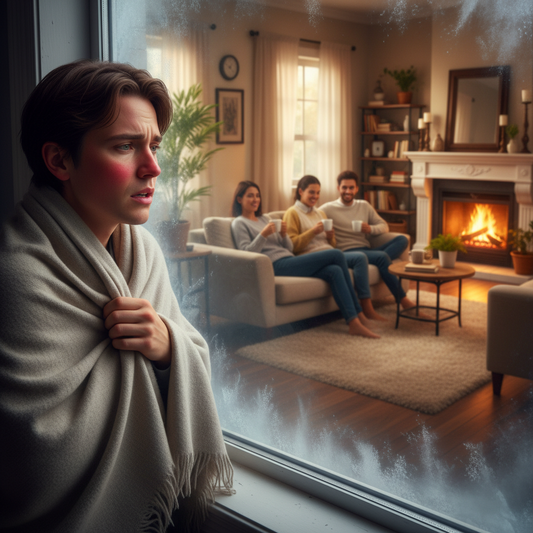
You’re in the same room as everyone else.
Same temperature. Same environment.
But while others seem comfortable, you’re already reaching for a jacket. Your hands feel cold. Your feet follow. And you start wondering:
Why do I feel colder than everyone else?
It can feel frustrating—especially when it seems like your body is reacting differently for no clear reason.
But in most cases, this isn’t random.
People experience cold differently because of how their body produces, retains, and distributes heat. It’s not a flaw—it’s variation.
How heat production differs from person to person
Your body is constantly generating heat through metabolism.
Even when you’re resting:
- your organs are active
- your muscles maintain tone
- your body is producing energy
This internal activity creates warmth.
But not everyone produces heat at the same rate.
Cause → effect:
- Higher metabolic activity
- More internal heat generated
- Slower onset of feeling cold
On the other hand:
- Lower heat production
- Less internal warmth available
- Faster perception of cold
This doesn’t mean something is wrong. It simply means your baseline heat output is different.
That’s why two people in the same space can feel completely different temperatures.
How blood flow affects how quickly you feel cold
Heat doesn’t just need to be produced—it needs to be delivered.
Your blood carries warmth from your core to the rest of your body. In cold conditions, your body reduces blood flow to extremities to conserve heat.
But how strongly this happens varies from person to person.
Some people:
- maintain slightly more blood flow to their hands and feet
- feel warmer longer
Others:
- experience faster or stronger restriction
- feel cold sooner, especially in fingers and toes
This is why cold sensitivity often shows up first in the hands and feet.
If you’ve noticed your extremities get cold quickly, it connects directly to how the body prioritizes core temperature over peripheral warmth.
Why body composition changes how you retain heat
Heat retention is just as important as heat production.
Your body loses heat through the skin, and how quickly that happens depends partly on body composition.
Factors that influence this include:
- natural insulation (like body fat)
- surface area relative to body size
- how easily heat escapes from the skin
Cause → effect:
- More insulation → slower heat loss
- Less insulation → faster heat loss
This is one reason why people with different builds experience cold differently—even in the same conditions.
It’s not about better or worse. It’s about how efficiently heat is retained once it’s produced.
Why hands and feet feel it first
Even if your overall body feels okay, your hands and feet often tell a different story.
That’s because:
- they are farthest from your core
- they have less insulation
- they lose heat quickly
- blood flow is reduced there first
So even a small drop in temperature can:
- reduce warmth in the extremities
- affect sensation and comfort quickly
This is also why people who “feel colder” often describe it starting in their fingers or toes.
If you’ve experienced that pattern, it aligns with how extremities are the first place your body reduces heat delivery.
Some people use solutions that reduce heat loss in everyday conditions to keep extremities from cooling as quickly during daily activities.
How sensitivity and perception play a role
Cold isn’t just physical—it’s also sensory.
Your nerves detect temperature and send signals to your brain. Some people are simply more sensitive to these signals.
That means:
- the same temperature can feel colder to one person
- discomfort may register sooner
- changes in temperature are felt more quickly
This doesn’t mean your body is actually colder—it means you’re more aware of the change.
In practical terms:
- you notice discomfort earlier
- you react sooner
- you may need to adjust before others do
How environment and habits influence the difference
Two people in the same place don’t always have the same exposure.
Small differences matter:
- one person is near a draft
- one person has been sitting still longer
- one person just came in from outside
- one person is more active
Movement, clothing, and exposure history all influence how your body responds.
For example:
- staying still allows heat to drop faster
- moving generates warmth
- repeated exposure can change how your body adapts over time
This is why cold sensitivity can feel inconsistent—it’s influenced by both your body and your environment.
Some people rely on tools designed to help manage cold sensitivity during daily routines when their environment doesn’t change much.
Misconception: “Something is wrong with my circulation”
It’s common to assume that feeling colder means poor circulation.
But in many cases, that’s not accurate.
What you’re experiencing is often:
- a stronger heat-conservation response
- faster reduction of blood flow to extremities
- differences in heat production or retention
These are normal variations, not necessarily problems.
Your body is still doing what it’s designed to do—protecting your core and managing energy.
It’s just doing it in a way that makes you feel cold sooner.
Practical takeaway: understand your baseline, not someone else’s
The most useful shift is to stop comparing your experience to others.
Instead, pay attention to your own patterns:
- Do your hands or feet get cold first?
- Do you feel cold quickly when inactive?
- Do you warm up slowly or quickly?
These patterns reflect how your body manages heat.
Once you understand that, it becomes easier to anticipate:
- when you’ll feel cold
- what conditions affect you most
- how your body responds over time
The goal isn’t to match someone else’s tolerance.
It’s to understand your own.
Conclusion
Some people feel cold faster than others because of differences in:
- how much heat their body produces
- how effectively that heat is distributed
- how well it’s retained
- how quickly temperature changes are perceived
These differences are subtle, but they add up.
Feeling colder isn’t random—it’s how your body manages heat.
And once you understand that, the comparison starts to matter a lot less.